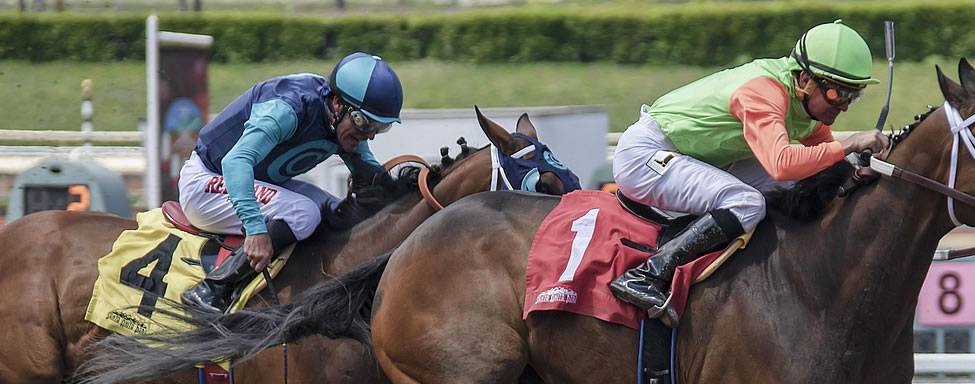

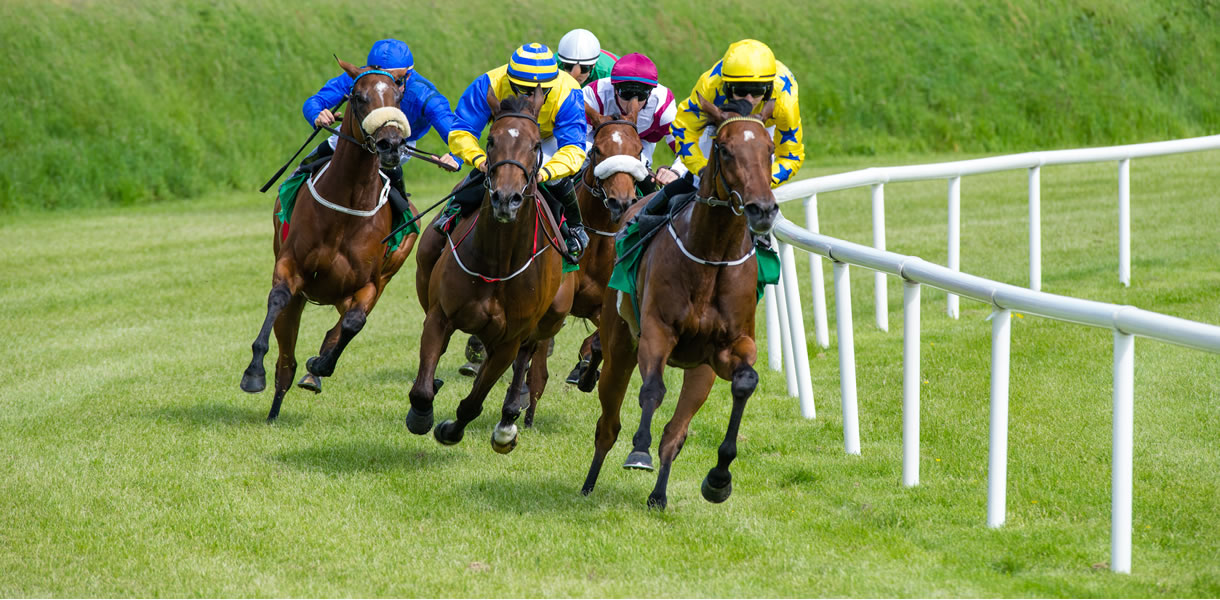
To understand a day at the British races, you must first understand that it has almost nothing to do with horses. A horse is merely a four-legged biological RNG (Random Number Generator) used to justify drinking gin at 10:30 AM while dressed like a redundant extra from The Great Gatsby.
If you are planning to go racing today check out our guide below of what to expect during your day. To book tickets and find useful course information on all of today's race meetings you can find that on the Go Racing page here
The day begins with the Sartorial Struggle. In the UK, racecourse dress codes are designed by people who still haven’t forgiven the 20th century for happening. If you are heading to the Royal Enclosure at Ascot, you must wear a top hat. Not a fun, "I’m in a steampunk band" top hat, but a serious, "I own a coal mine in 1894" top hat. For the ladies, the challenge is the Fascinator. A fascinator is a piece of headwear that looks like a bird of paradise had a high-speed collision with a satellite dish. It must be pinned to the scalp with enough structural integrity to withstand a North Sea gale, because the British weather views a "Summer Flat Meeting" as a personal challenge to see how many silk dresses it can turn transparent with horizontal sleet.
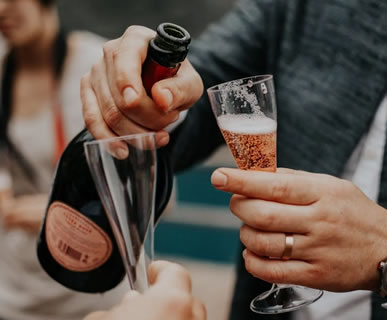
The journey to the course—let’s say Aintree for the Grand National—is where the social hierarchies begin to blur. On the 9:00 AM train from Liverpool Lime Street, you will find the "Lads on Tour" in suits so skinny their circulation is being cut off at the ankles, sitting next to a grandmother who has studied the Racing Post with the intensity of a codebreaker at Bletchley Park. By 10:30 AM, the first bottles of Prosecco are popped. In the UK, it is a legal requirement that any group of four or more women heading to the races must consume enough sparkling wine to float a small Frigate before they reach the turnstiles.
Once inside, you head to the "Ring." This is a collection of bookmakers—men named 'Alfie' or 'Big Tel'—who stand on boxes and shout numbers at the sky like prophetic lunatics. The novice racegoer will attempt "Logic." They look at the Form. They see that Galloping Gavin has won three times on "Good to Firm" ground and is carrying a light weight. They place a calculated £5 bet. The veteran racegoer, however, knows the truth. They will ignore the form and bet on a horse called Noisy Neighbor because their actual neighbour, Mr. Henderson, hasn't stopped mowing his lawn at 7:00 AM. Or they pick a horse because the jockey is wearing "a lovely shade of teal." Statistically, the "Teal Strategy" is just as effective as the "Logic Strategy," but with 40% less headache.
If you find yourself at Cheltenham in March, you are in the heart of "The Jump Season." This is not the elegant, sipping-champagne-on-a-lawn affair of the summer. This is Tweedgeddon. The "Cheltenham Roar" is the sound of 70,000 people screaming as the first race starts, a noise so loud it can be heard by astronauts and people in Gloucester. Here, the horses jump over fences the size of a suburban bungalow. You stand in the mud, clutching a pint of Guinness that is 30% rainwater, watching a horse named Shishkin or Constitution Hill fly through the air while an Irishman next to you screams "GO ON MY SON" with such force his lungs might actually exit his body.
Dining at the races is a tale of two extremes. At Royal Ascot, you might have a picnic that involves smoked salmon, crystal glassware, and a man named Sebastian serving you quiche from the boot of a Range Rover. At a midweek meeting at Wolverhampton, dinner is a "Racecourse Burger." This is a grey disc of mystery meat served in a bun that has the structural properties of a damp sponge, priced at roughly the same cost as a small Italian villa. You eat it while standing in a queue for the toilets, wondering if you can claim the burger as a tax loss.
The highlight of any day is the Tip. Someone—usually a man in a flat cap who smells faintly of damp Labradors—will lean in and whisper: "I’ve had a word. The trainer’s cousin’s barber says Slippery Sid is a certainty in the 4:15." You bet your remaining £20. You watch the race. Slippery Sid starts well, then appears to get distracted by a particularly interesting blade of grass at the back of the pack, eventually finishing so far behind the winner that the commentators have already started talking about tomorrow’s weather before he crosses the line. You look for the man in the flat cap. He has vanished into the ether, probably to go tell someone else about a "certainty" in the 5:00.
The journey home is a sombre, yet boisterous, affair. The train carriage is a graveyard of dreams and crumpled tickets. There is always one person who won £400 on a 50/1 outsider and insists on buying everyone a round of overpriced gin-and-tonics from the buffet car. There is always another person who is trying to explain to their spouse over the phone why the "rent money" is now technically "an investment in the future of the British Thoroughbred industry."
Despite the rain, the lost money, the blisters, and the questionable burgers, we go back. Why? Because for those forty seconds when the pack thunders past the grandstand at Goodwood—the "Glorious" part of the meeting actually living up to its name for once—and the sun hits the silk of the jockeys’ jerseys, it is the most exciting place on Earth. It’s a pantomime with hooves. It’s a fashion show in a field. It’s the only place in the UK where you can lose £50 and feel like you’ve had a "successful day out" because you saw a minor celebrity near the paddock and didn't spill your drink on a Duchess.
Check out the main racecourses in the UK with details of the big races
 Join The Winners