
If the Epsom Derby is a high-society ballet performed on a lopsided stage, the Grand National is a frantic, mud-splattered obstacle course designed by someone who thought regular horse racing was "a bit too safe and predictable." Held annually at Aintree, Liverpool, it is the race that stops a nation—mostly because half the population is hunched over a betting slip trying to remember why they put five pounds on a horse named "Biscuits for Breakfast."
The race officially kicked off in 1839, though people had been jumping fences in Liverpool for a few years prior. The early versions were essentially "steeplechases" in the literal sense: you’d start at point A, look for the nearest church steeple at point B, and try to get there without drowning in a ditch or being eaten by a disgruntled sheep. The 1839 winner was a horse named Lottery. This remains the most honest name in the history of the sport, because winning the Grand National is precisely that—a lottery where the ticket is a half-ton animal and the "draw" involves thirty-three other animals trying to occupy the same square inch of turf. In those early days, the course included a stone wall, because apparently, wooden fences weren't character-building enough. They eventually got rid of the wall, presumably because the local masons were tired of repairing it every April.
Aintree is home to fences that have names like villains in a Dickens novel. These aren't your garden-variety hurdles; these are massive, green monsters reinforced with spruce and a sense of malice. Becher’s Brook: Named after Captain Becher, who fell into the water jump in 1839 and famously remarked that "water tastes better with whiskey." The fence has a terrifying drop on the landing side. Horses jump it thinking they’re landing on flat ground, only to realize the floor has been lowered by three feet. It’s the equine equivalent of walking down the stairs in the dark and thinking there’s one more step when there isn't. The Chair: The tallest fence on the course. It’s called "The Chair" because it’s positioned where the distance judge used to sit. It features a six-foot-wide ditch in front of it. It’s designed to make horses reconsider their career choices. Canal Turn: A fence that requires a 90-degree turn immediately upon landing. If a horse forgets to turn, they end up in the Leeds-Liverpool Canal, which is a lovely scenic route but generally frowned upon by the stewards.
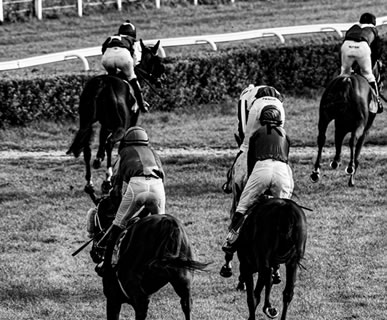
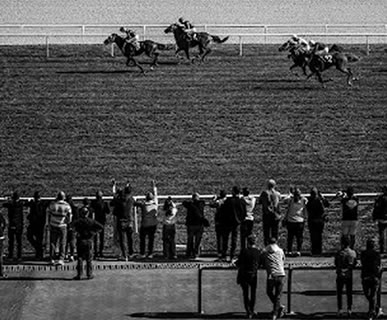
The race is four miles and two and a half furlongs long. To put that in perspective, that’s roughly the distance from "I’m feeling great" to "Why do my lungs taste like copper?" By the time the field reaches the second lap, the "pack" usually looks like a group of commuters who have just realized they’ve missed the last train home. This is where the Grand National becomes a survival horror movie. Jockeys start looking around to see who’s left, and the horses start looking for any available exit that doesn't involve another hedge.
The Grand National is the only race where a horse can become a household name without ever winning a Triple Crown. Red Rum is the undisputed King of Aintree. He won the race three times (1973, 1974, and 1977) and came second twice. He was trained on the beaches of Southport, running through seawater to soothe his dodgy hooves. He became so famous he practically had his own agent. He once switched on the Blackpool Illuminations, which is a level of celebrity most humans will never achieve. Then there’s Foinavon (1967). In one of the most ridiculous moments in sporting history, a massive pile-up at the 23rd fence (now named after him) stopped almost the entire field. Foinavon, who was so far behind he hadn't even reached the chaos yet, simply steered around the carnage, hopped over the fence, and trotted off to win at odds of 100/1. It remains the ultimate "slow and steady wins the race" moment, provided everyone else crashes into a heap.
The Grand National is the one day of the year when people who wouldn't know a horse from a large dog suddenly become expert analysts. "I’m going for Dancing Clouds," your Auntie Sheila will say, "because the jockey is wearing a lovely shade of teal." And the infuriating thing is, Sheila usually wins. Meanwhile, the "experts" who have spent three weeks studying form, wind speed, and the horse's grandmother’s favorite snack will see their 4/1 favorite fall at the first fence because it tripped over its own shadow. The betting ring at Aintree is a place of high drama and low-yield investment. Millions of pounds change hands based on names, colors, or whether the horse looked "a bit cheeky" in the paddock.
We have to talk about Ladies' Day. If the Oaks at Epsom is "High Fashion," Aintree is "High Octane." The fashion in Liverpool is a force of nature. We’re talking about tan so orange it could be used for traffic safety, eyelashes long enough to create their own weather systems, and heels so high they require a pilot’s license. It is a glorious, unapologetic celebration of glamour. When the wind picks up across the Mersey, watching thousands of fascinators attempt to take flight is almost as exciting as the race itself.
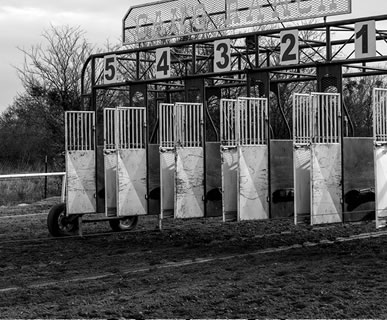
The start of the Grand National is a mess. Forty horses (though recently reduced to 34 for safety) all trying to line up behind a piece of tape while their jockeys try to keep them from vibrating out of their skins. There’s always a "false start" because one horse—usually a 100/1 outsider—decides it wants to get a head start on the four-mile journey. This leads to a chorus of boos from the crowd and forty jockeys performing a synchronized U-turn while shouting things at each other that you won't find in a prayer book.
One of the unique features of the National is the "loose horse." When a jockey falls off, the horse often decides that, actually, they quite like this game and keep running. A loose horse is a chaotic element. They have no rider to tell them where to go, so they often wander across the track, jump fences sideways, or try to lead the field despite not technically being in the race anymore. There is nothing quite as nerve-wracking as seeing the leader of the race being "menaced" by a riderless horse who just wants to be friends.
In a world of hyper-sanitized, predictable sports, the Grand National is a throwback to a wilder era. It’s gritty, it’s unpredictable, and it’s deeply, weirdly British. It’s a race where a postman’s horse can beat a billionaire’s stallion, and where the hero isn't always the one who crosses the line first, but the one who simply makes it back to the stables for a well-earned bucket of oats. It’s four miles of holding your breath, screaming at the television, and wondering why on earth you thought "Thunderbolt" was a good bet. But when that winner crosses the line, caked in mud and looking exhausted but proud, you realize why it’s called the "Grand" National. It’s a massive, messy, marvelous institution.
Check out the big race histories from the classics to The Grand National
 Visit The Betting Zone