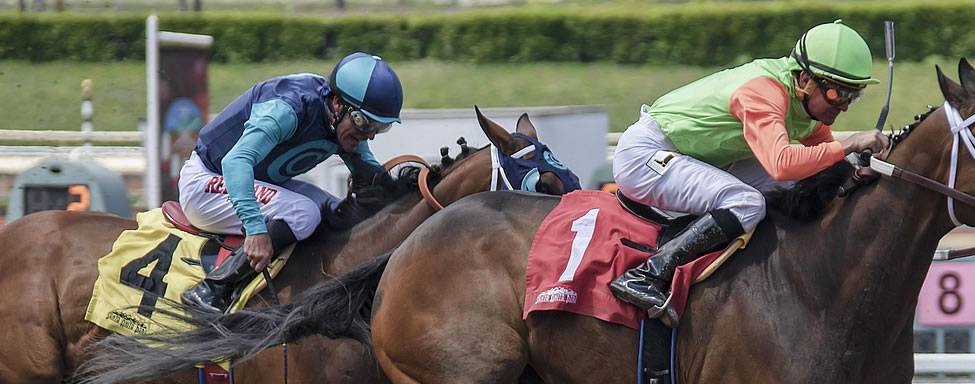

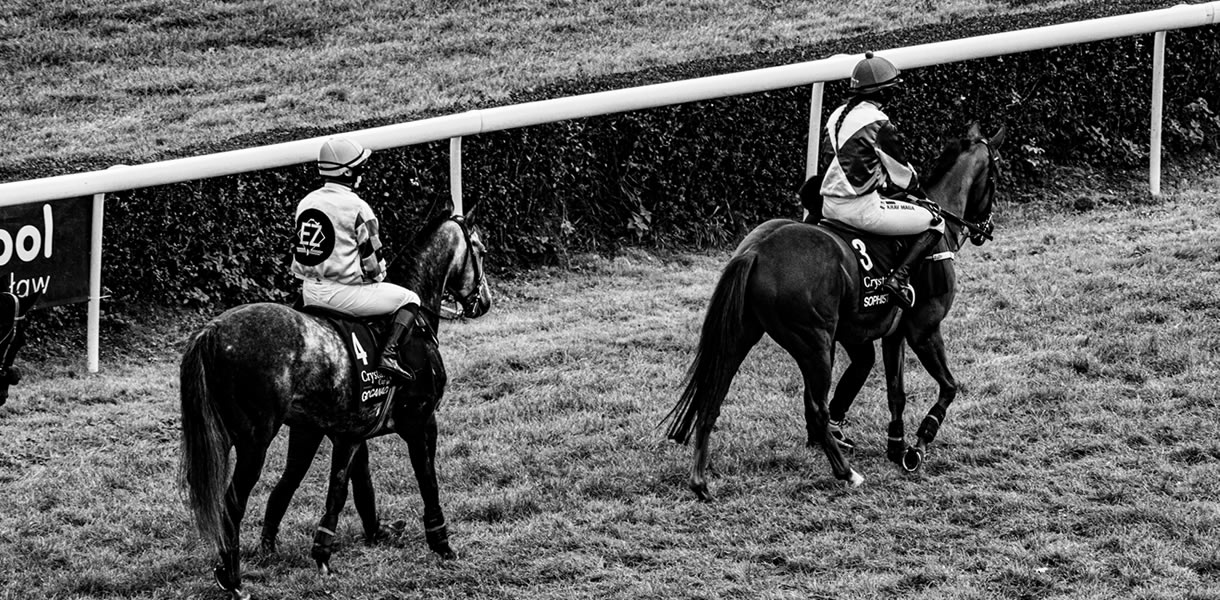
If the 1000 Guineas is the refined debutante ball of the horse racing world, the 2000 Guineas is its rowdy older brother—the one who started the party five years earlier, brought more money, and has a slightly higher tendency to run into things. Since 1809, the 2000 Guineas has been the ultimate test for three-year-old colts, essentially asking the equine equivalent of a high school senior to run a mile uphill as fast as humanly (or horsely) possible.
The race was established by the Jockey Club, an organization that, in 1809, consisted mainly of men who owned half of England and spent their afternoons arguing about the "purity of the bloodline" while drinking enough port to pickle a whale. They decided that the 2000 Guineas Stakes should be the premier test for three-year-old colts. Why 2000? Because the prize fund was—you guessed it—2000 guineas. In 1809, a guinea was worth 21 shillings. To put that in perspective, 2000 guineas was enough to buy a fleet of carriages, several dozen servants, or one very small, very confused Caribbean island. It was a staggering amount of money, designed to ensure that only the fastest, most expensive, and most pampered horses in the world would turn up to Newmarket. The first winner was a horse named Wizard. History doesn’t tell us if he could actually perform magic, but considering he managed to navigate the Rowley Mile without the modern luxuries of equine massages and scientifically balanced electrolytes, he was clearly doing something right.
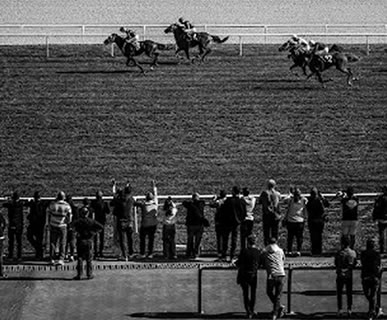
The race takes place at Newmarket on the Rowley Mile. Now, to a normal person, a "straight mile" sounds like a simple task. "Just go that way until you hit the stick," you might tell the horse. But the Rowley Mile is a psychological minefield. First, it is incredibly wide. A horse can feel very lonely out there. There’s no rail to lean on, no corners to help you balance—just a vast expanse of Suffolk grass and the terrifying realization that you are being chased by twenty other half-ton animals. Then there’s "The Dip." About two furlongs from the finish, the ground drops away like a bad stock market report. A horse galloping at 40 miles per hour suddenly finds the floor disappearing, only for it to reappear as a steep uphill climb to the finish line. This is where champions are made and where "sure things" turn into "expensive lessons in humility." If a horse doesn’t have the balance of a mountain goat and the heart of a lion, The Dip will swallow them whole.
The 2000 Guineas is the opening act of the English Triple Crown. The goal is simple but statistically impossible: win the 2000 Guineas (a mile), then the Epsom Derby (a mile and a half with corners), then the St Leger (nearly two miles). It is the equine version of asking a sprinter to win a 100-meter dash, then a middle-distance race, and then a marathon, all in the same summer. Because of this, Triple Crown winners are rarer than a polite conversation on the internet. The most famous of these was Nijinsky in 1970. Ridden by Lester Piggott (a man who looked like he’d been born in a saddle and hadn't stepped out of it since), Nijinsky was so good he made the other horses look like they were running in slow-motion underwater. Since then, the Triple Crown has become a bit of a mythological beast; modern horses are bred so specifically for either "speed" or "stamina" that asking them to do both is considered a bit rude.
You cannot talk about the 2000 Guineas without talking about Frankel. In 2011, Frankel didn't just win the race; he committed a sporting felony. Usually, in a mile race, horses stay in a pack to save energy. Frankel’s jockey, Tom Queally, decided this was boring. He let Frankel go from the start. By the halfway point, Frankel was so far ahead that the cameraman had to zoom out just to see the rest of the field. People in the stands were checking their watches, wondering if the other horses had stopped for a snack. Frankel won by six lengths, but it felt like six miles. It remains one of the most "Wait, is that allowed?" moments in sporting history. He retired undefeated, having convinced the world that he wasn't actually a horse, but a small jet engine disguised in brown fur.
The 2000 Guineas is the first "Classic" of the year, which means it’s the first time the public gets to see the "wonder horses" they’ve been reading about all winter. This leads to a specific type of madness known as "Newmarket Fever." Punters will flock to the course, convinced they have the inside track because they saw a stable lad looking happy in a pub three weeks ago. Millions of pounds are wagered on three-year-old colts who, let’s be honest, are essentially the horse equivalent of 17-year-old boys. They are fast, they are strong, but they are also prone to getting distracted by a shiny butterfly or deciding they don't like the color of the jockey's hat. The history of the race is littered with "certainties" that finished tenth because they got stage fright or decided that the Rowley Mile was a bit too "uphill" for their liking.
Newmarket in early May is a weather lottery. You might get a glorious spring day, or you might get a horizontal sleet storm that makes the horses look like they’re running through a car wash. The fashion reflects this. You’ll see men in tweed suits that weigh more than the jockeys, and women in hats that are aerodynamically designed to be picked up by the Suffolk wind and deposited three counties away. Beneath the glamour, however, is a deep-seated love for the animal. The Newmarket crowd is "horsey" in a way that’s hard to describe. They can tell you the pedigree of a horse back to the 1700s but might forget their own wedding anniversary. To them, the 2000 Guineas isn't just a race; it’s a performance review for the entire Thoroughbred industry.
In recent decades, the race has been dominated by massive operations like Coolmore (Ireland) and Godolphin (Dubai). These are the tech giants of the horse world. They spend billions ensuring their horses have the best grass, the best trainers, and probably their own private Spotify playlists. This has turned the 2000 Guineas into a global showdown. It’s no longer just a local skirmish between English lords; it’s an international battle for bragging rights and future stallion fees. If a horse wins the 2000 Guineas today, his "retirement package" (i.e., his fee for making more little horses) jumps into the tens of millions. It’s the only job in the world where you work for two minutes and then spend the next twenty years being pampered in a luxury barn.
The 2000 Guineas survives because it is pure. There are no gimmicks. It’s just a straight line, a mile of grass, and a group of horses trying to prove who is the king of their generation. It’s a race where legends are born (like Dancing Brave or Sea The Stars) and where dreams are crushed in the shadow of the grandstand. It represents 215 years of human obsession with speed, and the hilarious, enduring hope that this year, finally, we’ve found a horse that can outrun the wind. So, if you ever find yourself at Newmarket on Guineas weekend, keep your eyes on the horses, your hand on your wallet, and whatever you do—don't underestimate The Dip. It has no mercy.
Check out the big race histories from the classics to The Grand National
 Visit The Betting Zone