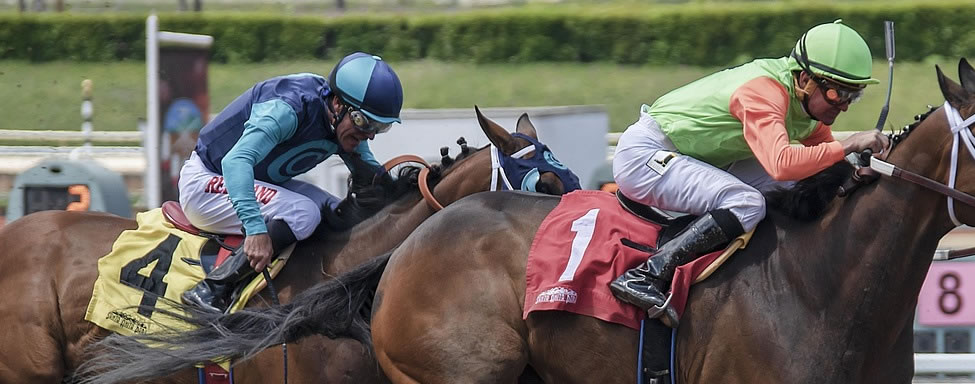

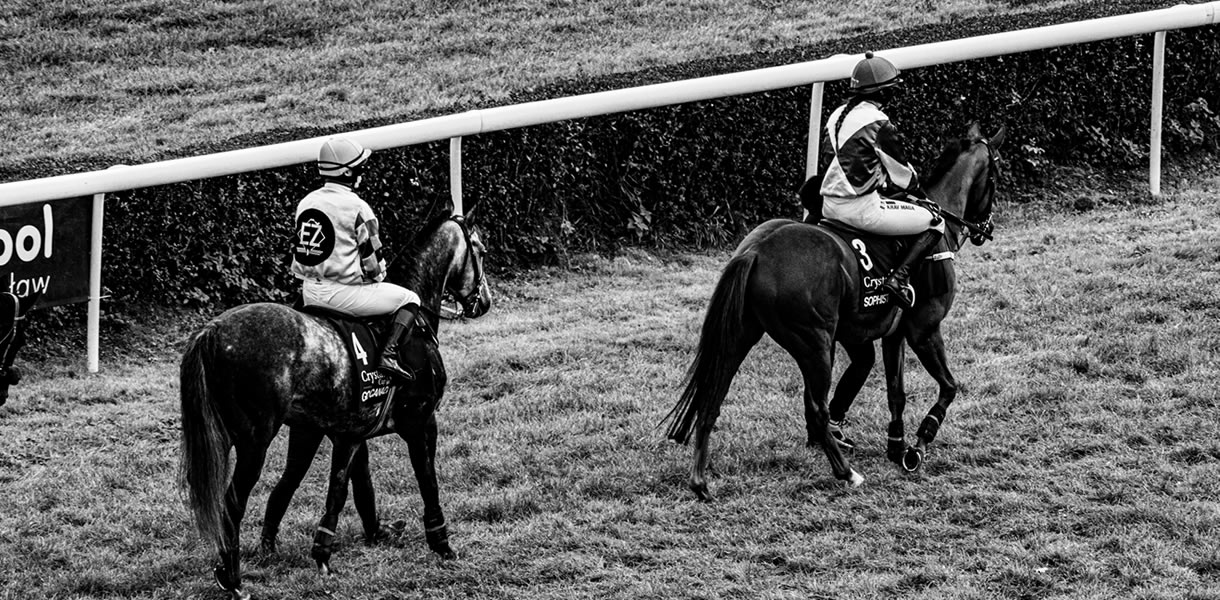
If you’ve ever looked at a three-year-old female horse and thought, “I bet she could run faster than a speeding ticket if there was a nice bowl of oats at the finish line,” then you, my friend, have the soul of a Regency-era gambler. Welcome to the history of the 1000 Guineas, a race that has been proving for over two centuries that the girls just want to have fun—provided "fun" involves sprinting a mile uphill while a small person in neon silk pajamas bounces on your back.
The story begins in 1814. To put that in perspective, Napoleon was being exiled to Elba, the War of 1812 was still technically a thing, and people generally smelled like wet wool and existential dread. Into this world stepped the Jockey Club of Newmarket, a group of gentlemen who possessed two things in abundance: impressively tall hats and a desperate need to find out whose horse was the fastest. They already had the 2000 Guineas for the boys (and some girls), but they decided the three-year-old fillies deserved their own exclusive party. Thus, the 1000 Guineas Stakes was born. The name wasn't just a marketing gimmick; the "Guineas" referred to the prize fund. A guinea was worth 21 shillings, or one pound and one shilling. If you adjust for inflation, a thousand guineas in 1814 was roughly equivalent to "all the money in the world," or at least enough to buy a very large castle and several smaller hamlets. The first winner was a filly named Charlotte, owned by Mr Wilson. History doesn’t record if Charlotte was a diva, but given she won the inaugural running on the Rowley Mile, she likely spent the rest of her life refusing to walk on anything less than velvet.
The race is run on Newmarket’s Rowley Mile. Now, to the uninitiated, "a mile" sounds like a lovely distance for a morning jog. To a racehorse, the Rowley Mile is a psychological thriller. It is a straight course, which means there are no corners to hide behind. It’s just you, your rivals, and a terrifyingly long stretch of grass that culminates in "The Dip." The Dip is exactly what it sounds like—a downhill plunge followed by a sharp uphill climb to the finish. It is designed to test a horse’s balance, heart, and willingness to forgive its jockey for the indignity of it all. Many a filly has charged toward the finish line looking like a champion, only to hit the uphill climb and decide that perhaps a career in dressage or standing very still in a field would have been a better life choice.
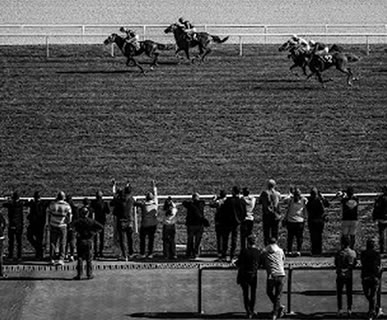
The 1000 Guineas quickly became one of the five "Classics" of British flat racing. In the horse world, winning a Classic is like winning an Oscar, but with more hay and fewer long-winded speeches. For the truly ambitious fillies, the 1000 Guineas is the first leg of the Fillies' Triple Crown. The plan is simple: win the 1000 Guineas (the speed test), win the Epsom Oaks (the stamina test), and then win the St Leger (the "why are we still running?" test). Only nine fillies have ever pulled this off. The most famous was probably Sceptre in 1902. Sceptre wasn't just a good horse; she was a biological anomaly. Not content with winning the 1000 Guineas and the Oaks, she actually won four out of the five Classics in a single year. She would have probably won the fifth one, too, if she hadn’t been busy being an absolute legend. Her owner, Robert Sievier, was a man who treated money like it was a contagious disease he was trying to get rid of, often betting huge sums on his own horse. Sceptre carried the weight of his gambling debts on her back and still outran everyone.
You can't talk about the 1000 Guineas without mentioning the people. Take Lester Piggott, for example. Known as "The Long Fellow," Piggott won the race seven times. He had a face that looked like it was carved out of a very determined walnut and a riding style that suggested he was trying to vibrate the horse across the finish line through sheer willpower. Then there are the horses like Oh So Sharp (1985), trained by the legendary Sir Henry Cecil. She won the 1000 Guineas in a finish so close it required a magnifying glass and a prayer to settle. She went on to complete the Triple Crown, proving that she was, indeed, "Oh So Sharp." And we must mention the 2021 winner, Mother Earth. Aside from having a name that sounds like a premium organic fertilizer, she proved that the Aidan O'Brien training machine at Ballydoyle in Ireland had essentially cracked the code for producing perfect fillies
You might ask, "Why do we care about three-year-old horses running in a straight line?" The answer is that the 1000 Guineas is the ultimate "Coming Out" party. It’s where we find out which fillies have the speed to be icons and the genes to be the mothers of the next generation. The winners of this race go on to become the blue-blooded matriarchs of the racing world. Their foals sell for millions of dollars to people who have very shiny shoes and very private jets. But beyond the economics, there is the sheer, ridiculous beauty of it. There is something inherently funny and wonderful about several hundred years of British tradition being pinned on the whims of a teenage horse. A horse who might, on any given Sunday, decide that she doesn’t like the way the wind is blowing or that the jockey’s silks clash with her coat.
Today, the 1000 Guineas remains a cornerstone of the sporting year. It’s a day of high fashion, low-yield betting, and the constant, thundering reminder that while humans might write the history books, the horses are the ones doing all the heavy lifting. So, the next time you find yourself at Newmarket in early May, wearing a hat that’s slightly too big for your head and clutching a betting slip for a horse named something like "Sparkle Pony" or "Dusty Duchess," take a moment to appreciate the madness. You are part of a 212-year-old tradition of hoping that a very fast girl will help you pay for your lunch. And if your horse loses in The Dip? Just remember: she’s probably just saving her energy for a very important nap later. That’s the real history of the 1000 Guineas—a blend of prestige, pace, and the unpredictable nature of a thousand pounds of muscle with the personality of a spoiled teenager.
Check out the big race histories from the classics to The Grand National
 Visit The Betting Zone